
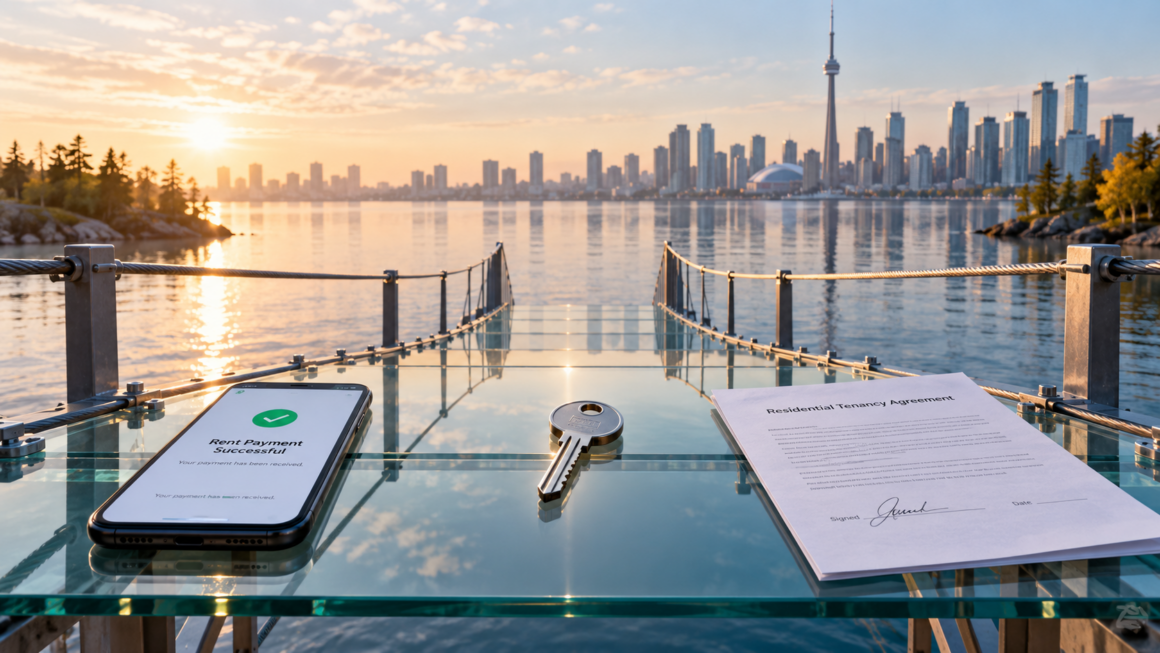

Sending $1,000, $2,000 or more to someone you met through a rental listing is a big ask.
Even when everything is legitimate, a tenant may be thinking: Is this person really the landlord? Am I sending the right amount? What happens if the listing disappears tomorrow?
That hesitation makes sense. The Government of Canada specifically lists being asked for a deposit without a formal rental agreement as a warning sign for rental fraud. RCMP warnings have also documented cases where renters sent substantial e-Transfers to fake landlords before discovering the person had no connection to the property.
For landlords, the answer is not a longer reassurance message. It is a rental process that gives the tenant fewer reasons to wonder whether something is off.
Key Takeaways
- Make your identity and connection to the property easy to verify.
- Give the tenant clear written terms before asking them to send money.
- Ask only for deposits and advance rent that are permitted in your province.
- Use a payment process that creates a clear record for both sides.
- Give confirmation or a receipt instead of leaving the tenant wondering whether payment arrived.
Tenants are looking for proof, not promises
A scammer can write, “Don’t worry, I’m the owner.”
That sentence proves very little.
Trust builds when the details line up: the person showing the property uses the same name as the person on the lease, the rental address is correct, the deposit amount matches provincial rules, and payment instructions arrive through the same channel the tenant has been using throughout the application.
Canada’s Competition Bureau recommends that renters confirm the property, schedule a showing, research the address and review a lease before sending money.
A landlord who makes those checks easy immediately feels different from someone trying to rush a stranger into an e-Transfer.
1. Make it easy to confirm who you are
Start with simple consistency.
Use your real name or registered management company name throughout the listing, application, lease and payment instructions. Give the tenant a phone number or email address they can return to if something does not look right.
Show the actual unit whenever possible. For a tenant relocating from another city, a live video tour or a viewing with an authorized representative is far more reassuring than a folder of listing photos.
If you manage the property on someone else’s behalf, be prepared to explain that relationship.
You do not need to email a stranger copies of your passport, driver’s licence or other sensitive documents to prove you are legitimate. The Office of the Privacy Commissioner of Canada recommends limiting the collection and handling of personal information to what is necessary and protecting sensitive information appropriately. That principle is sensible for both sides of the rental transaction.
2. Put the agreement in front of the payment request
A tenant should know exactly what they are paying for.
Before sending payment instructions, give them written terms showing things such as:
- the rental address
- landlord and tenant names
- monthly rent
- start date
- amount being requested
- what the payment represents
- agreed payment method
- any applicable deposit terms
In B.C., for example, landlords must prepare a written tenancy agreement, and a security deposit is capped at half of one month’s rent.
The amounts change across Canada, which is another reason landlords should avoid copying deposit language from a lease they found online.
| Province | Example of the current deposit rule |
| British Columbia | Security deposit: up to half of one month’s rent. |
| Alberta | Security deposit: up to one month’s rent and must be placed in an interest-bearing trust account. |
| Ontario | A rent deposit may be required up to one rent period or one month’s rent, whichever is less, and is applied to the last rental period. |
| Nova Scotia | Security deposit: up to half of one month’s rent and held in trust. |
| Quebec | A landlord cannot require a separate security deposit and cannot require more than the first payment period’s rent in advance. |
These are examples, not a substitute for checking the tenancy rules where the rental is located.
3. Remove the “send money to this random email” feeling
e-Transfer is familiar to Canadians, and plenty of legitimate landlords use it. The awkward part comes when the tenant receives an unfamiliar email address and a message saying, “Send the deposit here.”
Give context.
If you accept e-Transfer, state the recipient information in writing and make sure it matches what the tenant has already been told. Once payment arrives, record what the payment was for.
For recurring rent, a documented bank-payment workflow can create an even clearer trail. Pendo Rent’s comparison of e-Transfer and pre-authorized debit for rent explains how the two approaches differ for Canadian landlords.
With PendoPay, landlords using the payment system go through identity verification, and tenants complete a bank-payment authorization rather than casually emailing banking information to their landlord. Payment activity can then be tracked as part of the rent workflow.
That structure matters because trust works both ways. The landlord wants proof that rent was paid. The tenant wants proof that their money went where it was supposed to go.
4. Send confirmation without making the tenant ask
Imagine sending a $1,500 deposit and hearing nothing for the next six hours.
Most people are going to check their banking app three times and wonder whether they typed the email address correctly.
A quick confirmation solves that.
Keep a record showing:
$1,500 received on September 15, 2026 — first month’s rent for Unit 204, 123 Example Street.
Receipt requirements and practices vary by province, but good records benefit everyone. Quebec’s TAL, for example, states that a tenant has the right to request a rent receipt and stresses the importance of written proof of payment. Alberta says tenants can request a security-deposit receipt showing the amount, date and parties involved.
Digital receipts and payment ledgers also remove the future argument of “I sent it” versus “I never received it.”
5. Drop the artificial urgency
There may genuinely be several applicants interested in a unit.
You can say that without turning the payment request into a countdown.
Messages like “Send the deposit in the next 20 minutes or I’m giving it to someone else” resemble the pressure tactics tenants are repeatedly warned about in rental-scam guidance.
Give a clear deadline instead:
“If you’d like to proceed, please review the tenancy agreement and send the agreed deposit by 5 p.m. tomorrow. Let me know if you have any questions before sending it.”
The landlord still gets a decision. The tenant gets enough space to verify what they are doing.
A quick trust check before requesting money
Before sending a deposit or first-rent request, look at the process from the tenant’s screen.
Can they clearly see:
- who you are?
- which unit they are renting?
- the written tenancy terms?
- exactly how much they owe?
- why that amount is being collected?
- where the money is going?
- how they will know you received it?
If one of those answers is fuzzy, fix that before sending the payment instructions.
Pendo Rent’s guide to rental scams in Canada is also worth sharing with anyone on your team who handles listings or move-ins.
A simple example
Suppose a tenant in Halifax is moving to Calgary for work and cannot attend the showing personally.
A landlord could send them thirty listing photos and say, “Trust me.”
A better process would be to schedule a live walkthrough, show the actual unit and building entrance, answer questions on camera, send the tenancy agreement with the landlord’s contact information, clearly identify the permitted Alberta security deposit, and provide documented payment instructions.
After payment arrives, the tenant receives confirmation.
None of those steps is particularly complicated. Together, they remove most of the uncertainty that makes sending the first payment uncomfortable.
FAQs
How can a tenant verify that a landlord is legitimate in Canada?
They can confirm the rental address, view the property, verify the person’s identity or authority to rent it, review the tenancy agreement and check whether the requested deposit follows provincial rules. Canada’s Competition Bureau also recommends researching the address and checking for duplicate listings.
Should a landlord ask for a deposit before signing a lease?
Landlords should follow their province’s tenancy rules, but asking a stranger to send money without clear written rental terms creates an obvious trust problem. Government fraud guidance specifically identifies deposits requested without a formal agreement as a warning sign.
What is the safest way for a tenant to send a rental deposit?
There is no single payment method that removes every risk. The important pieces are verifying the landlord and property first, confirming that the amount is lawful, using a traceable payment method and keeping written proof of the transaction.
For ongoing rent, landlords considering digital collection can read Pendo Rent’s guide to collecting rent online in Canada.
What if the tenant seems nervous about sending money?
Treat the question as reasonable. Walk them through who will receive the payment, what it covers and how it will be recorded. A tenant asking for verification before sending thousands of dollars is doing reasonable due diligence.
Trust starts before move-in
The first payment sets the tone for the tenancy.
If the process involves changing email addresses, vague instructions and a rushed e-Transfer, even an honest landlord can accidentally look suspicious.
A clear lease, consistent identity, correct deposit amount and documented payment trail make the transaction easier to trust. They also leave the landlord with better records if there is ever a disagreement later.
For landlords who want the lease and payment process kept in one workflow, PendoPay supports Canadian rent collection through pre-authorized debit alongside payment records and tenant information.
Start a free 30-day trial today. Explore Pendo Rent
Disclaimer: This article is for informational purposes only and does not constitute legal advice. Always consult your local Residential Tenancy Branch or a qualified legal professional for advice specific to your situation.