
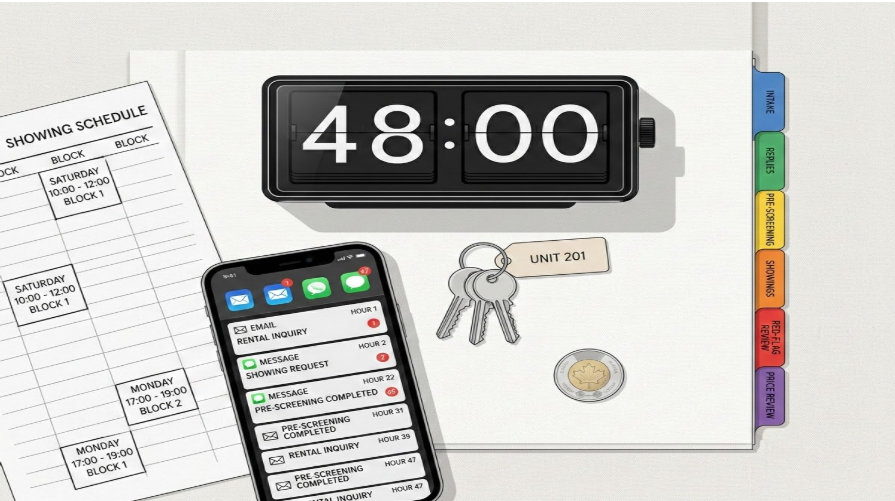

You wrote the listing, uploaded the photos, and hit publish. The next two days can turn that work into a strong shortlist, or into a pile of half-read messages and missed viewing opportunities.
This guide is for Canadian landlords and small property managers who want a simple process: reply quickly, ask everyone the same pre-screening questions, book showings in blocks, and keep a clean record of what happened.
Timing matters more in a softer rental market. Average asking rent across Canada was $2,029 in May 2026, down 4.7% year over year and marking the 20th consecutive month of annual declines, according to the Rentals.ca National Rent Report. In many major markets, landlords are competing for good tenants rather than fielding lineups.
Key takeaways
- Strong applicants message several listings at once. Reply within a few hours when possible, and always by the same day.
- Ask every inquirer the same short pre-screening questions. Consistency helps you stay fair, compliant, and fast.
- In BC, a landlord cannot charge an application or processing fee, including a fee described as refundable.
- Only a couple of serious inquiries by hour 48 is a reason to diagnose the price, photos, wording, or platform, rather than simply wait another week.
Why the first 48 hours matter more in 2026
Canada’s rental market has shifted. CMHC’s 2026 Mid-Year Rental Market Update reports declining asking rents in Toronto, Vancouver, and Calgary, with Ottawa also beginning to soften. New supply has given renters more options, and recently completed buildings face some of the highest vacancy pressure.
That makes the first wave of inquiries useful market feedback. A $2,000-per-month unit represents about $66 in gross rent for every vacant day. If you priced the unit using current comparables, the first two days tell you whether the listing is creating enough interest to justify holding the price.
For a fuller pricing strategy, read How to Reduce Vacancy Without Dropping the Rent Too Quickly.
Your 48-hour plan, step by step
1. Hour 0-1: Set up one intake channel
Route inquiries from every listing platform into one inbox or dashboard so nothing gets missed. Save your pre-screening questions as a paste-ready template before the first message arrives.
2. Hours 1-24: Answer everything the same day
A useful two-line reply beats a polished one sent two days later. Thank the person, ask your pre-screening questions, and offer a small set of viewing times.
Your response speed is part of the applicant’s first impression of how you manage the property.
3. Pre-screen with the same questions every time
Ask about:
- The desired move-in date
- The number of intended occupants
- Pets and smoking
- Whether the advertised rent fits the household budget
- Willingness to complete a consent-based screening process at the application stage
Keep the wording consistent for comparable applicants.
4. Book showings in one or two blocks
A Saturday morning or weekday evening block takes less time than scattered one-off appointments.
Leave a small gap between appointments for notes and late arrivals, and confirm the viewing a few hours beforehand.
5. Screen out scams and fabricated information early
Do not skip your process because someone offers money quickly.
Watch for overpayments, pressure to refund an “extra” amount, refusal to view or verify identity, and documents that cannot be confirmed independently.
6. Hour 48: Read the numbers and adjust
Compare the asking rent with at least three active, genuinely comparable listings.
Many views but few inquiries can point to price or presentation. Inquiries without booked showings can point to unclear details, restrictive terms, or slow follow-up. Near silence may mean the platform or listing needs work.
If exposure is the problem, use Where Should You List Your Rental in Canada? to review your channel mix.
Rental inquiry red flags and what they may mean
| What you see | What it may mean |
| Offers a deposit or rent sight unseen, then “accidentally” overpays | A possible overpayment scam. The person may ask you to return the difference before the original payment is reversed. |
| An urgent story requires skipping the viewing or application | A pressure tactic designed to short-circuit your normal checks. |
| Documents look flawless, but the employer or reference cannot be confirmed | Possible fabricated pay stubs or references. Verify through independently sourced contact details. |
| Refuses consent-based screening but offers several months of rent upfront | Upfront money does not replace identity, affordability, rental-history, and reference checks. |
For document fraud, read Fake Pay Stubs and Rental Applications: What Canadian Landlords Should Watch For.
Pendo Rent tip
Keeping inquiries, applications, lease records, screening activity, and payment history in one place gives you a clearer timeline when questions or disputes arise. Certn-powered tenant screening can be started from the same workflow.
What can landlords legally ask when pre-screening in Canada?
Focus on the proposed tenancy, not protected personal characteristics.
Questions about move-in timing, intended occupants, pets, smoking, affordability, and references can relate to the tenancy. Questions tied to protected grounds can create human-rights risk.
In BC, section 10 of the Human Rights Code prohibits discrimination in tenancy based on protected characteristics such as race, ancestry, family status, disability, sex, and lawful source of income. Other provinces and territories have their own human-rights rules.
Application fees are another trap. Section 15 of BC’s Residential Tenancy Act says a landlord must not charge for accepting, processing, or investigating a rental application, or for accepting a person as a tenant. That includes a fee described as refundable.
For the wider screening process, read Screening Smarter in 2026: What’s Legal, What’s Risky, and What’s Changing.
Common mistakes in the first 48 hours
The costliest mistake is waiting for a “perfect” applicant while strong early prospects sign elsewhere.
Close behind is replying only to messages that sound polished. Writing style is not a reliable measure of tenancy fit, and selective follow-up can pull your process away from consistent criteria (especially now with more people becoming AI savvy!).
Other avoidable problems include:
- Keeping no record of who was asked what
- Changing the screening questions from person to person
- Cutting the rent before checking the photos, description, viewing schedule, and listing channel
- Accepting money before completing the normal application and verification process
Thin interest at 48 hours isn’t a reason to panic, but it should prompt you to review your listing and process.
A simple example
Priya owns a fourplex in Coquitlam. She posts a two-bedroom on Thursday morning, responds to all 11 inquiries by evening with the same five questions, and books seven qualified prospects into one Saturday viewing block.
She takes notes immediately after each viewing and sends the same application instructions to the people who meet her published criteria. By Tuesday, she has a signed lease and a clean record of the process.
Her neighbour lists a similar unit the same day but responds whenever he has a spare moment. Three weeks later, he is still arranging individual showings.
At $2,000 per month, 21 vacant days represent roughly $1,380 in gross rent.
Frequently asked questions
How fast should a landlord respond to rental inquiries?
Within a few hours when practical, and no later than the same day.
Strong applicants often contact several listings and book viewings with the landlords who respond clearly and quickly.
Is it legal to charge a rental application fee in Canada?
Rules are provincial.
In BC, no. Section 15 of the Residential Tenancy Act prohibits fees for accepting, processing, or investigating an application, or accepting the applicant as a tenant.
In Alberta, the Residential Tenancies Act does not expressly prohibit rental application fees. A landlord may charge one if the application terms clearly state whether the fee is refundable. Landlords should still keep the amount reasonable, disclose it before payment, and follow Alberta’s privacy and human-rights requirements when screening applicants.
What should I do if my rental listing gets no responses in 48 hours?
Check the asking rent against at least three active comparables, then review:
- The lead photo
- The headline
- The description
- Restrictions and requirements
- Viewing availability
- The listing platforms being used
Change one or two variables at a time so you can see what improves the response.
How do I spot a rental scam as a landlord?
Be cautious when someone:
- Offers money sight unseen
- Overpays and asks for a refund
- Creates pressure to skip normal steps
- Supplies documents that cannot be independently verified
- Refuses reasonable identity and screening checks
Rental-fraud attempts can be reported to the Canadian Anti-Fraud Centre at 1-888-495-8501.
Should I accept several months of rent upfront instead of screening?
No. Upfront rent does not confirm identity, rental history, references, or whether documents are authentic.
Follow the same lawful, consent-based process for every comparable applicant.
Informational disclaimer
This article is for informational purposes only and does not constitute legal advice. Always consult your local Residential Tenancy Branch or a qualified legal professional for advice specific to your situation.
Run a process, not an inbox
Bringing inquiry records, Certn-powered screening, lease workflows, and time-stamped payment history into one place reduces the friction between listing and move-in. That’s where Pendo Rent fits.
Start a free 30-day trial today or contact us for a demo.